

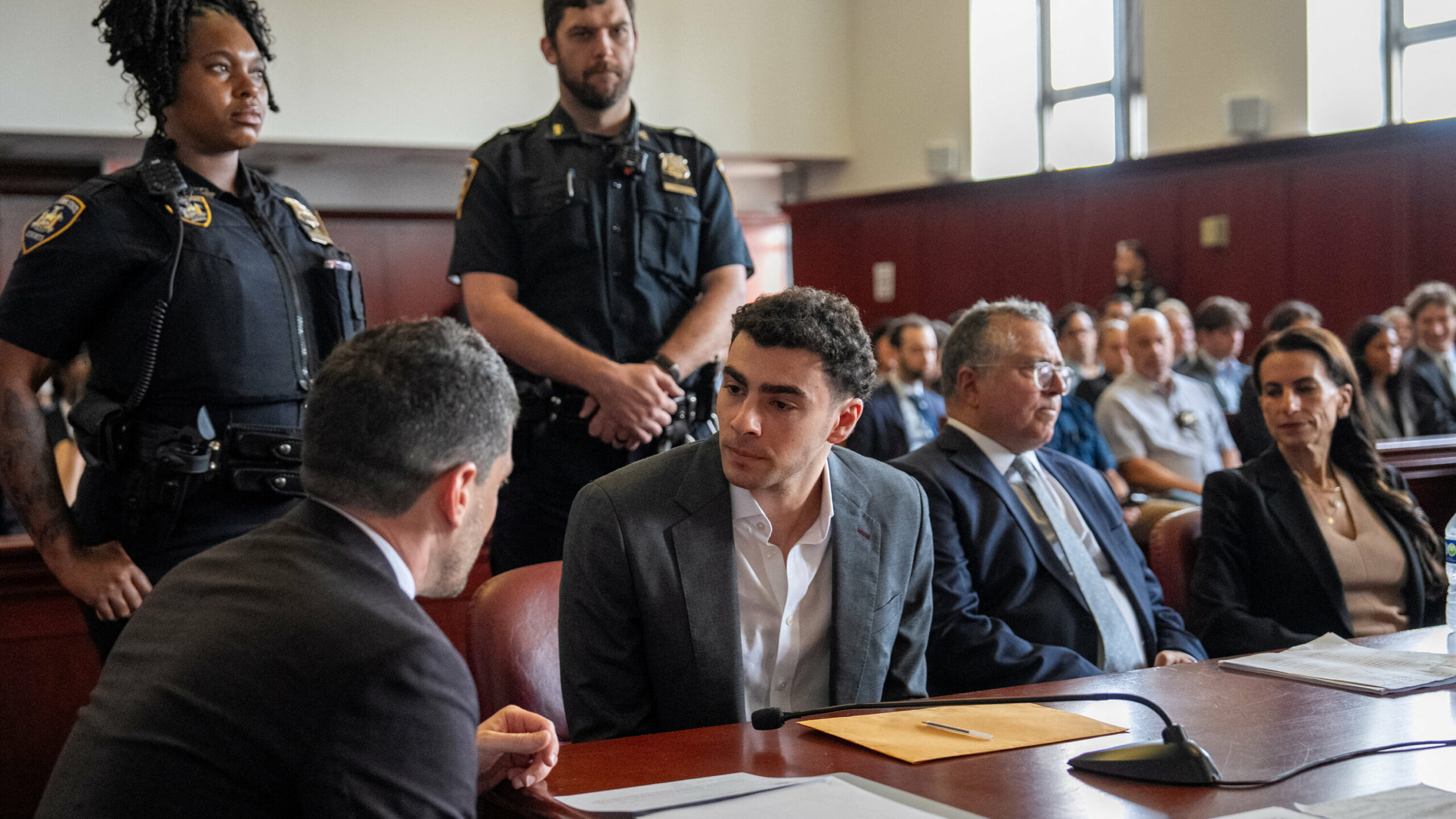
Luigi Mangione, the man accused of gunning down UnitedHealthcare CEO Brian Thompson outside a Manhattan hotel in December 2024, is expected to plead guilty on Friday to federal charges in a move that could dramatically reshape the legal battle still ahead of him in New York state court.
According to multiple people familiar with the discussions, Mangione’s defense team and federal prosecutors have been negotiating a possible plea agreement for weeks, with talks intensifying ahead of a court conference scheduled for Friday morning at the U.S. District Court in Manhattan. U.S. District Judge Margaret Garnett will need to approve any agreement reached between the two sides.
What Mangione Is Expected to Plead Guilty To
The 28-year-old faces two federal counts of stalking resulting in death, charges that carry the possibility of life in prison. Prosecutors had originally pursued a far more serious charge — murder through the use of a firearm — which could have exposed Mangione to the death penalty. That charge was thrown out by a federal judge earlier this year, narrowing the scope of what prosecutors could pursue at trial.
Neither Mangione’s legal team nor the U.S. Attorney’s Office has commented publicly on the substance of the negotiations, and people close to the case caution that talks remain fluid. This isn’t the first time a deal has appeared close: similar negotiations reportedly broke down in June, and it remains possible Friday’s conference ends without an agreement.
Why the Plea Could Reshape the State Case
The stakes of a federal plea extend well beyond the Manhattan courtroom where it would be entered. Mangione also faces a separate murder charge in New York state court, where jury selection is scheduled to begin next month. If he pleads guilty in federal court, his attorneys are widely expected to argue that New York’s double jeopardy protections should bar prosecutors from trying him again for the same underlying conduct.
New York’s double jeopardy rules are notably stricter than the federal standard, which generally allows both federal and state governments to prosecute the same act as separate crimes under the “separate sovereigns” doctrine. State-level protections, by contrast, have occasionally blocked follow-on prosecutions even after a federal case concluded. Legal analysts have pointed to the case of former Trump campaign chairman Paul Manafort, whose planned state fraud charges were dismissed by New York courts in 2019 after judges found the conduct overlapped too closely with charges he’d already faced federally.
Manhattan prosecutors appear to have anticipated this exact scenario. By scheduling the state murder trial to begin before the federal case, the district attorney’s office maneuvered to get a conviction on the books first — a sequencing decision that could now be complicated if Friday’s hearing produces a guilty plea days before jury selection is set to start.
Legal experts caution the outcome is far from certain. State prosecutors are expected to argue that the federal stalking statute, which targets interstate stalking conduct, addresses a legally distinct harm from New York’s second-degree murder statute, which centers on the intentional killing of Thompson. Defense attorney Paul Shechtman, who has followed the case closely, described the legal terrain as “incredibly complicated,” reflecting the uncertainty among even seasoned court-watchers about how a judge might rule.
The Underlying Case
Thompson, the 50-year-old chief executive of UnitedHealthcare and a father of two, was shot and killed outside the New York Hilton in December 2024 as he arrived for his company’s annual investor conference. Mangione was arrested days later in Pennsylvania after a five-day manhunt that drew national attention, partly due to the case’s unusual notebook evidence — investigators say Mangione had written entries expressing hostility toward the health insurance industry, including a passage from months before the shooting describing insurance as a prime “target.”
The killing set off a wave of public commentary about the U.S. health insurance system, with some observers expressing sympathy toward Mangione’s alleged grievances even as authorities pursued the case as a calculated, premeditated act. Mangione has pleaded not guilty in both the state and federal proceedings to date.
What Happens Next
If Friday’s conference produces a plea, attention will quickly shift to the Manhattan district attorney’s office, which has previously said it is prepared to fight any effort to dismiss the state case. If no deal materializes, Mangione’s case moves toward two parallel tracks: a state murder trial beginning with jury selection in September, and a federal trial that, absent a plea, is expected to start in January.
Either path virtually guarantees the case will remain in the national spotlight for months to come, with the outcome likely to influence how prosecutors nationally approach cases involving overlapping state and federal jurisdiction in high-profile violent crimes.