A Pointed Question, and an Answer That Didn’t Rule Anything Out
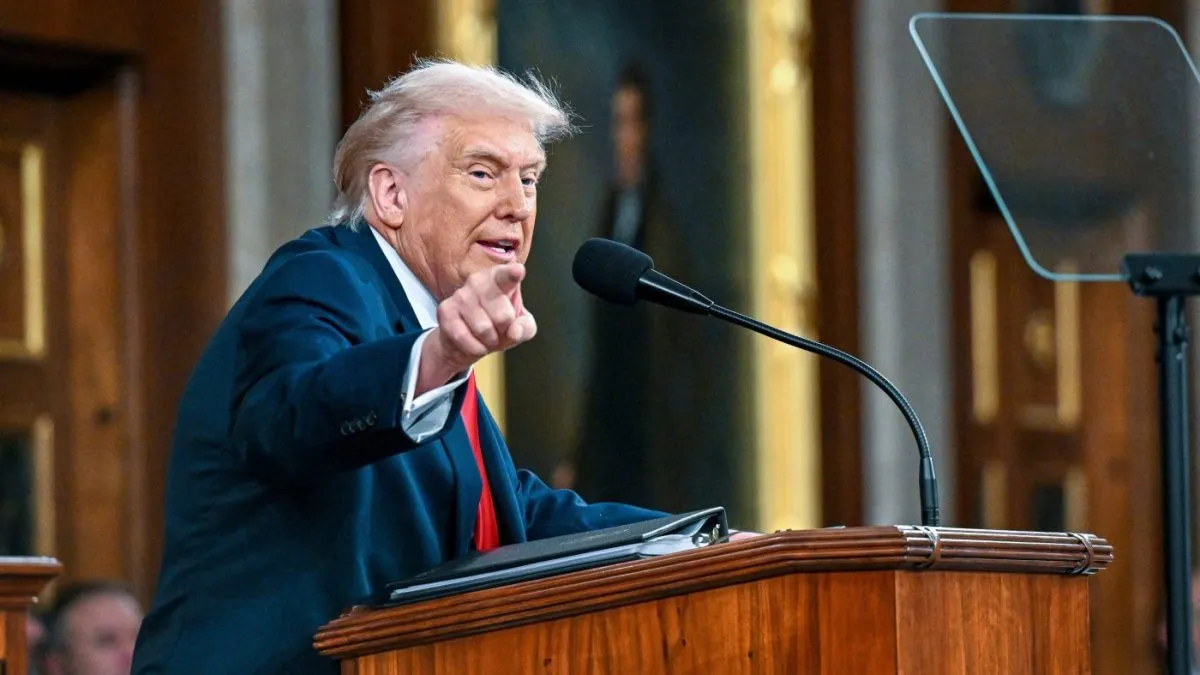
President Donald Trump declined to rule out the possibility of declaring a national security emergency as a means of asserting greater federal control over the upcoming 2026 midterm elections, according to a new interview that has drawn sharp attention from election law experts and political commentators alike.
The exchange took place on a conservative talk show, where the host suggested the idea directly to the president, framing it as a potential workaround given that the Senate has failed to advance Trump’s preferred elections legislation, known as the SAVE America Act. When the host proposed that Trump had “the right to declare a national security emergency for elections,” the president did not dismiss the suggestion, leaving open a question that election law specialists say carries significant constitutional weight.
Context: A Stalled Bill and a Pattern of Rhetoric
The SAVE America Act, which Trump has repeatedly described as essential, has stalled in the Senate despite the president’s continued public pressure campaign. The legislation has never appeared to have a realistic path to passage, according to congressional observers, which some analysts believe may be part of why the administration has increasingly floated alternative, more unilateral approaches to shaping how elections are run.
This is not the first time such ideas have surfaced. Earlier this year, Trump urged members of his party to consider steps toward centralizing oversight of voting in certain locations, and reports have circulated describing a draft executive order — reportedly discussed among some of the president’s allies — that would cite claims of foreign interference as justification for expanded federal authority over the 2026 elections. Trump has also focused public remarks on alleged foreign interference tied to past elections, a theme that some observers see as building a rhetorical foundation for more assertive action.
What the Constitution Actually Allows
Legal experts note that any attempt by the executive branch to take direct control over elections would run into significant constitutional obstacles. Under the U.S. Constitution, the administration of elections is primarily left to individual states, and federal courts have consistently upheld that structure over the decades. Presidents do generally have somewhat broader latitude to act unilaterally when genuine national security concerns are at stake — which helps explain why national security framing, rather than more conventional political arguments, has become the preferred vehicle for these proposals.
Still, several legal analysts who have studied the issue say any effort by the executive branch to assert direct authority over how elections are conducted would likely face immediate and intense legal challenges, and many doubt such an effort would ultimately survive judicial review. The gap between what a president might attempt and what would actually hold up in court, they note, is often significant — but that gap doesn’t necessarily prevent short-term disruption or uncertainty in the run-up to an election.
Why It Matters Heading Into the Midterms
The comments arrive at a politically sensitive moment, with early primary voting already underway in several states and the full midterm election cycle set to unfold over the coming months. Control of Congress hangs in the balance, and both parties are treating the 2026 midterms as a pivotal test of the current political landscape.
For voting rights advocates and election administrators, remarks like these — even when framed as hypothetical or floated by a third party rather than stated as firm policy — tend to generate real anxiety about the integrity and stability of the electoral process. Critics argue that repeated suggestions of potential federal intervention, regardless of whether they are ever acted upon, can undermine public confidence in elections well before a single emergency declaration is ever considered.
Supporters of the administration, meanwhile, argue that concerns about foreign interference and election security are legitimate and that the president is simply declining to take options off the table in a complex and evolving situation, rather than actively signaling intent to invoke emergency powers.
What Happens Next
For now, no formal action has been taken, and the SAVE America Act remains stalled in the Senate with no clear timeline for a vote. Whether Wednesday’s comments amount to nothing more than an offhand response to a hypothetical, or a genuine signal of the administration’s thinking as the midterms approach, is likely to remain a subject of intense debate in the weeks ahead — particularly as both parties gear up for what is shaping up to be one of the most closely watched election cycles in recent memory. Next Article