
A Report Nobody Was Expecting
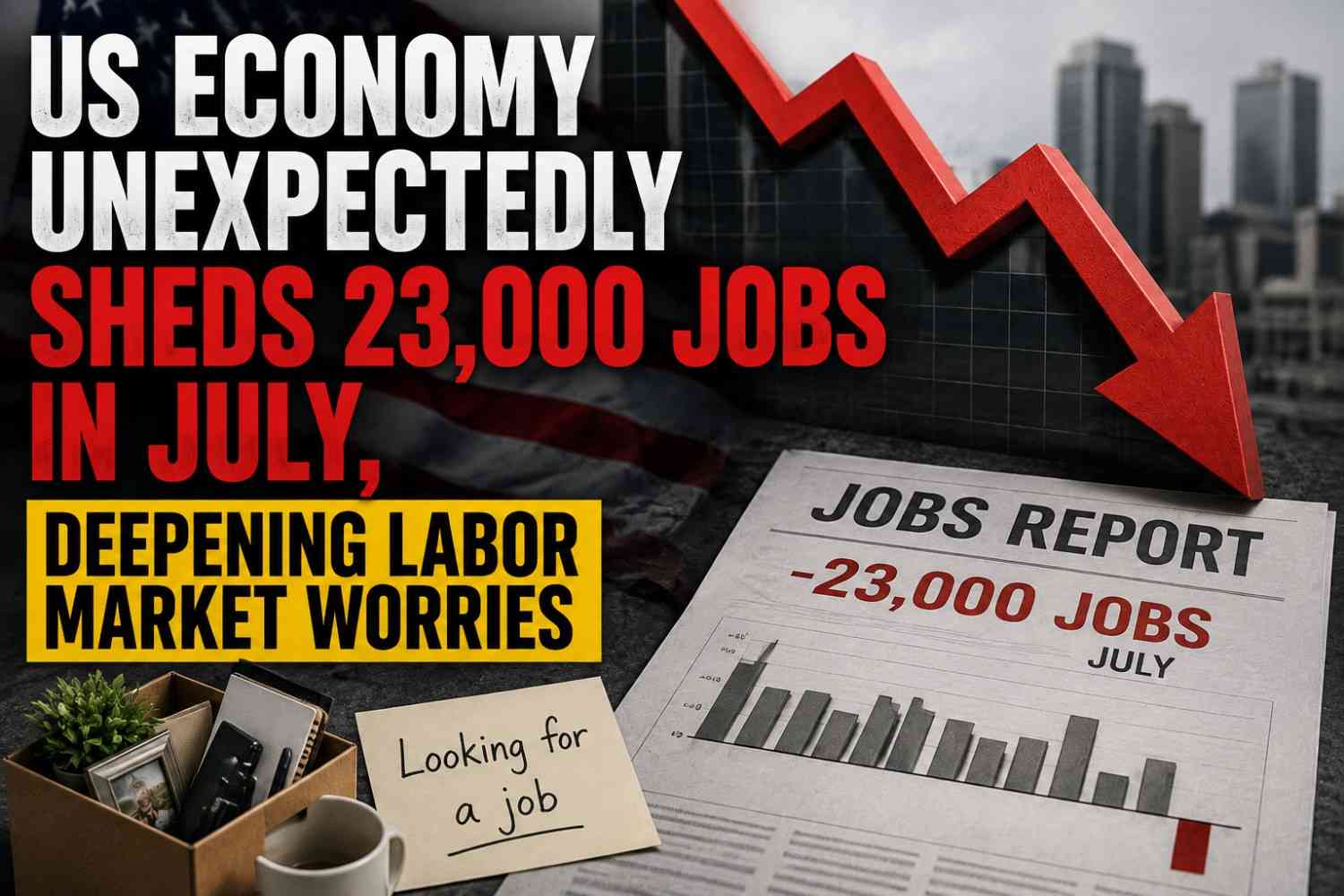
Economists had braced for a modest rebound. Instead, the U.S. labor market delivered a jolt: the economy lost 23,000 jobs in July, according to newly released Bureau of Labor Statistics data, marking one of the more unsettling economic reports of the year.
The figure stands in sharp contrast to forecasts, which had called for the addition of roughly 83,000 jobs, building on June’s already modest gain. Instead, July became the first month of outright job losses since February, catching markets and policymakers off guard.
The Numbers Behind the Surprise
The unemployment rate offered a confusing counterpoint. Rather than climbing alongside the job losses, it actually ticked down slightly, from 4.2% in June to 4.1% in July. But that dip wasn’t a sign of strength — it happened largely because more than 260,000 people left the labor force altogether, whether due to discouragement, retirement, or other factors, rather than because more people found work.
Compounding the concern, the Labor Department revised down its estimates for the two previous months by a combined 103,000 jobs. May’s originally reported gain of 129,000 was slashed to just 63,000, while June’s number was cut from 57,000 to a mere 20,000. Taken together, the picture that emerges is one of a labor market that has been quietly losing momentum for months, even as earlier reports painted a more resilient picture.
Where the Losses Hit Hardest
The job losses weren’t evenly distributed. Local education accounted for a significant chunk of the decline, shedding roughly 50,000 positions — a drop analysts partly attribute to distortions in how the data is seasonally adjusted, though it still weighed heavily on the headline number. Retail trade, including warehouse and merchandise operations, cut around 19,000 jobs, while insurance and other financial-sector firms trimmed about 14,000 positions.
There were pockets of resilience. The private sector managed to add roughly 30,000 jobs overall, with healthcare once again serving as one of the few consistently reliable sources of hiring growth. But that gain wasn’t nearly enough to offset losses elsewhere in the economy.
An Economy Under Pressure From Multiple Directions
The disappointing jobs data lands against an already complicated economic backdrop. Elevated energy prices, driven in part by the ongoing conflict involving Iran and disruptions tied to the Strait of Hormuz, have kept inflation stubbornly high, with the annual rate sitting at 3.5% as of June. That combination — a cooling labor market paired with inflation that refuses to fully retreat — puts the Federal Reserve in an uncomfortable position.
Under Chair Kevin Warsh, the central bank has been walking a tightrope between two competing risks: raising rates further to tame inflation, or holding steady to avoid choking off an already fragile job market. Futures markets had been pricing in meaningful odds of another rate move in the coming months, but July’s weak report complicates that calculus considerably, giving policymakers less room to justify tightening while employment data continues to soften.
What It Means for Workers and Businesses
For everyday workers, the mixed signals are becoming increasingly familiar. Surveys of worker sentiment have shown rising anxiety about job security, even among those who remain employed, alongside frustration from job seekers who feel increasingly locked out of a market that looks stronger on paper than it feels in practice.
Small businesses and employers, meanwhile, are contending with their own set of pressures — from persistent cost increases tied to global supply disruptions to uncertainty about where interest rates go next. Many say they are being more cautious about hiring, favoring existing staff over new positions until the economic picture becomes clearer.
What to Watch Next
All eyes now turn to the upcoming consumer price index report, which could offer the clearest signal yet about whether inflation is cooling enough to give the Fed room to ease off its current stance. Until then, July’s jobs report leaves both markets and everyday Americans with more questions than answers about where the economy is headed in the second half of 2026. Next Artical